
Etna isn’t just a mountain. She’s a living force, a goddess with moods, scars, and a sense of drama. I used to ski her slopes, carving turns above the clouds while steam hissed out of cracks in the snow beneath my boots. Some days we hiked her trails, black beneath our feet, still warm from eruptions past. You don’t just visit Etna. You offer her your attention and see what she gives you.
There’s a train, the Ferrovia Circumetnea, that loops around the volcano like a rusted ribbon. It moves slowly, and for good reason. Etna is a place where you don’t rush. Not because there’s nothing to do, but because everything here demands your presence. Even the ground beneath your feet could change tomorrow.
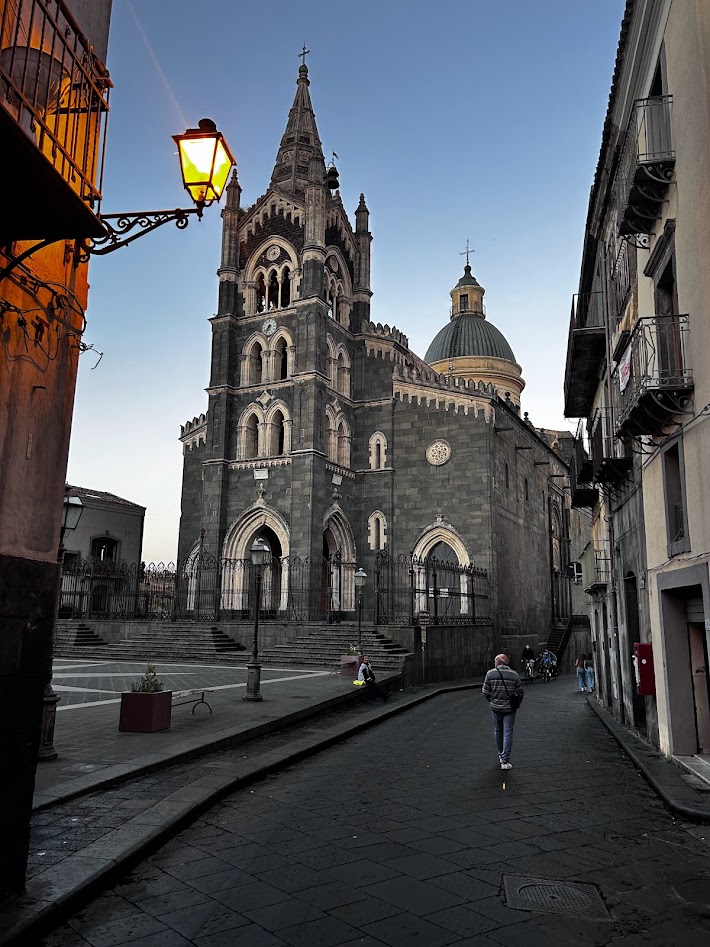
Randazzo: Built from Fire
On the north slope lies Randazzo, a medieval town carved from the volcano herself. The walls, the streets, even the church, the magnificent Basilica di Santa Maria, are built entirely of lava stone. Black, heavy, and proud. It’s a town that feels like it belongs more to the mountain than to Sicily.
Walk the edges and you’ll see vineyard walls, dry-stacked by hand from chunks of cooled lava. They snake across the land like those black firework snakes that slither out of a match flame, growing from nothing into something strange and alive. The kind of thing you remember from childhood summers. The kind of thing Etna still does on her own.
The Contrade: Etna’s Wine Map
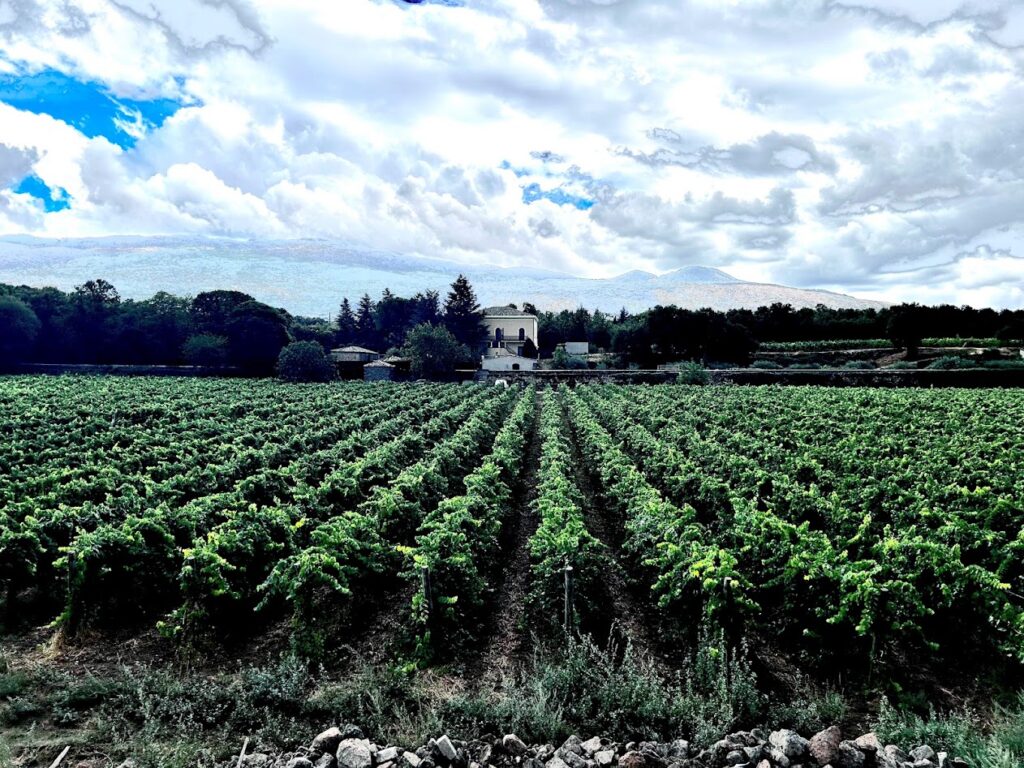
Etna doesn’t just erupt; she organizes. Her slopes are divided into contrade, small named districts like Burgundy’s climats. Each one has its own story written in lava: different eruptions, different soils, different altitude, different tension in the wine. The north side, cooler and older, is sacred ground for winemakers chasing purity and elegance.
One of the most soulful of these is Contrada San Lorenzo. It’s where Madaudo crafts wines that are honest and quiet, but not shy. Nerello Mascalese from here doesn’t shout. It lingers. Carricante from here isn’t flashy. It glows. These are wines that feel like the mountain, shaped by fire and softened by time.
What to Eat When the Volcano Sleeps
Etna feeds. The soil is absurdly fertile. Maybe because destruction and creation are always holding hands up here.
- Pasta alla Norma – Eggplant, tomato, salty ricotta. Named for a Catanese opera but pure Etna soul.
- Salsiccia al finocchietto – Fennel sausage grilled with smoke in the air. The pigs are happy here. You can taste it.
- Pistachios from Bronte – Grown in black soil, green as envy, nutty as Sicilian aunts.
- Mushrooms from Etna’s woods – Foraged under chestnut trees. Earthy, moody, mystical.
- Cannoli – Because if you don’t eat a fresh ricotta cannolo here, why even come?
Curiosities of the Crater
The Train: Circumetnea isn’t a ride, it’s a journey back to a slower time, puffing past lava fields and citrus groves.
Lava Caves: Hidden grottos where snow was once stored, now used by winemakers to age bottles like buried treasure.
Honey from the Chestnut Forests: Bitter, deep, smoky-sweet. Miele di castagno. Drizzle it on sharp cheese and forget your name. The Walls: Not just boundaries. These black lava walls hold heat, mark time, and carry stories and fingerprints of every hand that built them.
Dopo Domani: The Etna Time Code
One thing I always remember: the locals didn’t say domani, tomorrow. They said dopo domani, the day after tomorrow. It’s not laziness. It’s philosophy. When you live beside something that could erupt at any moment, you learn not to rush. Urgency is a luxury. Etna reminds you that nothing is promised, so you enjoy what you have now, and maybe a little later. That’s why the food simmers, the wine waits, and the people take their time.
Because tomorrow may never come. But dopo domani? That’s a maybe we can live with.
Etna isn’t just a destination. She’s a conversation between fire and patience. And if you’re lucky, really lucky, she’ll let you be part of it.

